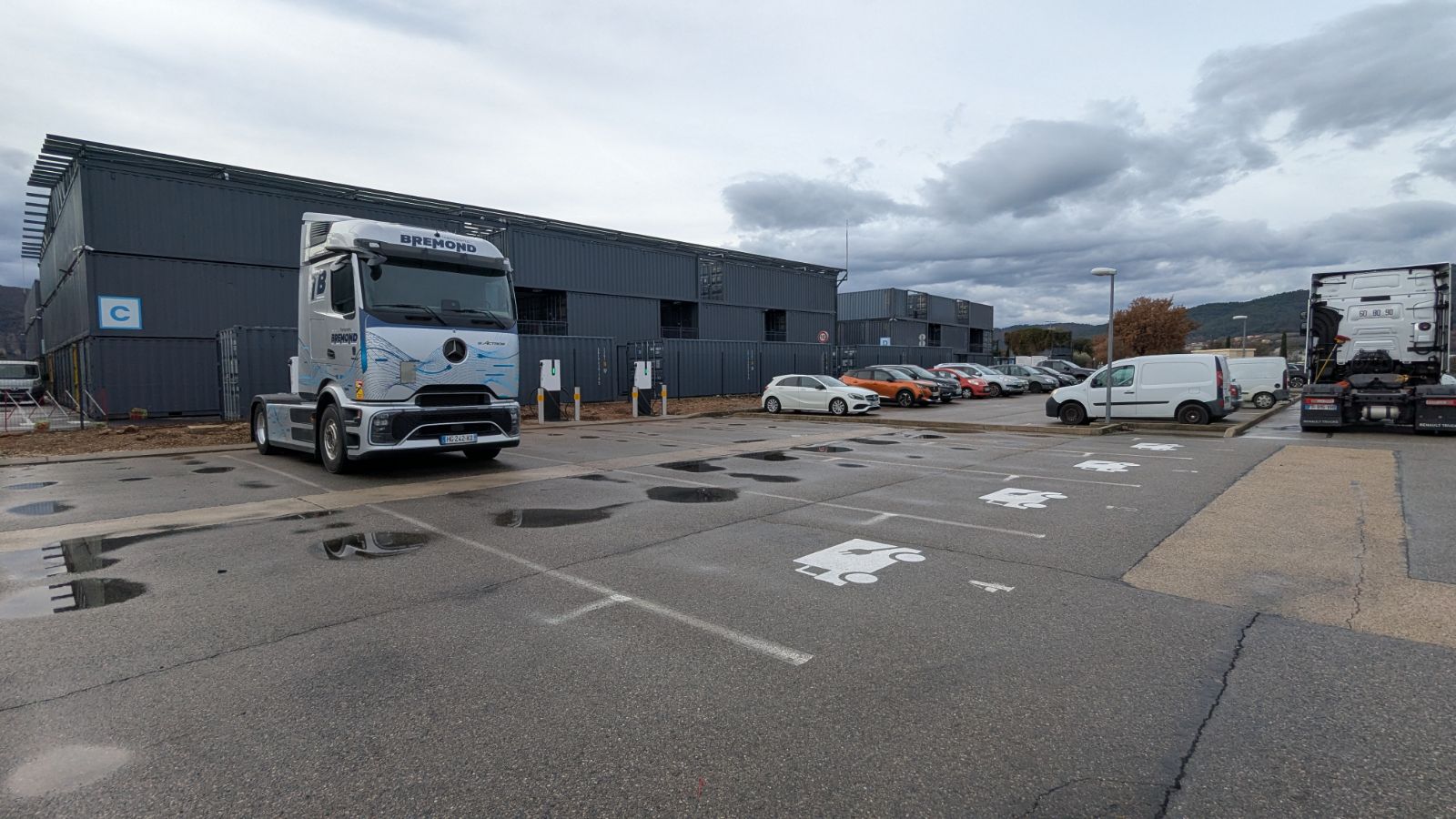
The electrification of truck fleets is no longer a futuristic option. Yet, the key question remains: what is the true Total Cost of Ownership (TCO) of an electric truck compared to a diesel one?
Many operators still believe that the initial cost of the vehicle is the main barrier. In reality, TCO depends on several key levers: energy, maintenance, infrastructure, operational planning, availability and fleet residual value. Recent studies show that conventional wisdom needs to be revised in light of European and international data.
1. Energy cost: a major lever in Europe
Energy constitutes a significant part of an electric truck’s TCO. According to the ICCT (2021), the combination of a competitive electricity price and optimised charging strategies can make the cost per kilometre of an electric truck comparable to or lower than that of diesel in Europe, even over long distances.
Chargepoly Example: Our charging stations and our Lucie platform allow for real-time supervision and optimisation of fleet charging, adapting power to operational needs and energy tariffs. This intelligent management of charging cycles reduces energy costs and limits vehicle downtime, all while guaranteeing fleet availability.
For urban or “last mile” delivery fleets, trends observed by the ICCT (2022) confirm that optimising charging cycles and integrating local sources like solar self-consumption can significantly reduce the cost per kilometre.
2. Maintenance: less expensive than anticipated
Electric trucks have significantly fewer complex mechanical components: no internal combustion engine, regenerative braking, and simplified gearboxes. According to the Journal of Cleaner Production, 2024, maintenance costs are much lower than for diesel trucks, significantly reducing total cost of ownership (TCO) over the vehicle’s lifetime.
However, these savings do not rely solely on the vehicle itself: the reliability and maintenance of the charging infrastructure are equally critical. Modular and highly reliable stations, monitored via Chargepoly’s Lucie Platform, enable:
- scheduling charging sessions without interruptions,
- detecting and resolving faults quickly,
- preventing battery and power system overload,
- anticipating preventive maintenance needs.
Combined with intelligent planning of workshop visits and real-time monitoring, this approach allows fleets to achieve overall truck availability above 99 % ([Chargepoly internal data, 2025]).
Key insight: Maintenance now covers both the vehicle and its charging infrastructure. The reliability of Chargepoly’s network becomes a direct lever for TCO reduction and operational performance.
3. Charging infrastructure: a decisive factor for TCO
An electric truck can only be profitable within a well-designed, optimised charging infrastructure. Deployment strategy, installed capacity, number of charge points, and intelligent power management all directly influence the TCO.
According to ICCT 2021 and the IEA Global EV Outlook 2025, optimised infrastructure can reduce TCO by up to 30 %, by smoothing power peaks, balancing energy distribution, and avoiding overinvestment.
Chargepoly example: Our modular stations, monitored via the Lucie Platform, allow operators to intelligently manage power between vehicles, anticipate fleet growth, and optimise truck availability while keeping CAPEX under control. A regional fleet equipped with Chargepoly stations maximised productivity while reducing energy costs.
Key insight: Maintenance ensures reliability, while charging infrastructure becomes a strategic tool to optimise TCO and secure operational performance.
4. Operational planning: an unsuspected impact
TCO parity is only achieved if the actual use of the trucks is taken into account. Poor charge planning can lead to +20% to 40% in additional costs. ICCT studies highlight that:
- Trucks often drive less than expected (400–600 km/day).
- Regulatory breaks and night periods allow for 150–300 km of charging.
- Proper station sizing helps avoid high public charging costs.
The advantage of Chargepoly: intelligent management and real-time visibility transform operational planning into a real driver of cost savings and productivity.
5. Residual value and lifespan
According to the ResearchAndMarkets (2021) study over a 15-year life cycle, battery-electric trucks offer an 8% to 16% TCO advantage compared to diesel, thanks to lower maintenance and fuel costs. While initial depreciation is higher for electric trucks, their residual value can remain competitive over the vehicle’s lifetime, especially with battery replacement.
6. Public Aid: a catalyst, not the engine
While subsidies and tax incentives reduce initial CAPEX, the determining factor remains operational efficiency. Cheaper energy, reduced maintenance, increased truck availability, and optimised planning constitute the primary TCO levers.
7. TCO becomes predictable
Unlike diesel, whose cost is volatile and subject to increasing taxes, the TCO of an electric truck can be predicted over a longer horizon, strengthening financial stability and strategic planning for European fleet managers.
Conclusion
Recent international studies (ICCT 2021 and 2022, ResearchAndMarkets 2021, Journal of Cleaner Production 2024, IEA 2025) show that the total cost of ownership (TCO) of electric trucks can be competitive with, and in some cases advantageous over, that of internal combustion vehicles. This is particularly true for mid‑weight and urban operation segments where predictable routes and high utilisation favour electric powertrains, though long‑haul and very light segments may face different dynamics.
In all cases, optimising energy management, charging infrastructure, operational planning, and maintenance improves TCO outcomes. With Chargepoly, businesses can confidently plan their transition to electric with a comprehensive strategy that maximises both economic and operational benefits.