A recent article in Motor Transport highlighted a figure that might make any fleet manager hesitate: installing a single charger for an electric heavy goods vehicle (eHGV) could cost £46,000, with grid connection fees potentially doubling that figure.
While these numbers reflect the reality of a traditional, rigid “one charger, one truck” approach, they portray an overly pessimistic view of eHGV transition costs. When fleet electrification is designed around smart load planning, shared power, and scalable architecture, the true cost per vehicle drops significantly.
Here is why looking at single-charger costs is often the wrong metric for fleet operators, and how modern architecture changes the financial equation.
1. The Flaw of Static Infrastructure vs. Dynamic Power
The £46,000 figure is based on a legacy mindset: buying a standalone, low-powered all-in-one charger dedicated to a single vehicle bay. These traditional monolithic chargers are completely inflexible—they can only do one thing. If you buy a slow 40kW–50kW charger, it trickles power to one truck for 10 hours overnight. It cannot scale, and it cannot speed up if an emergency operational shift arises.
If you scale that logic to a fleet of 10 or 20 trucks, the capital expenditure quickly becomes unsustainable (£460,000 to £920,000+).
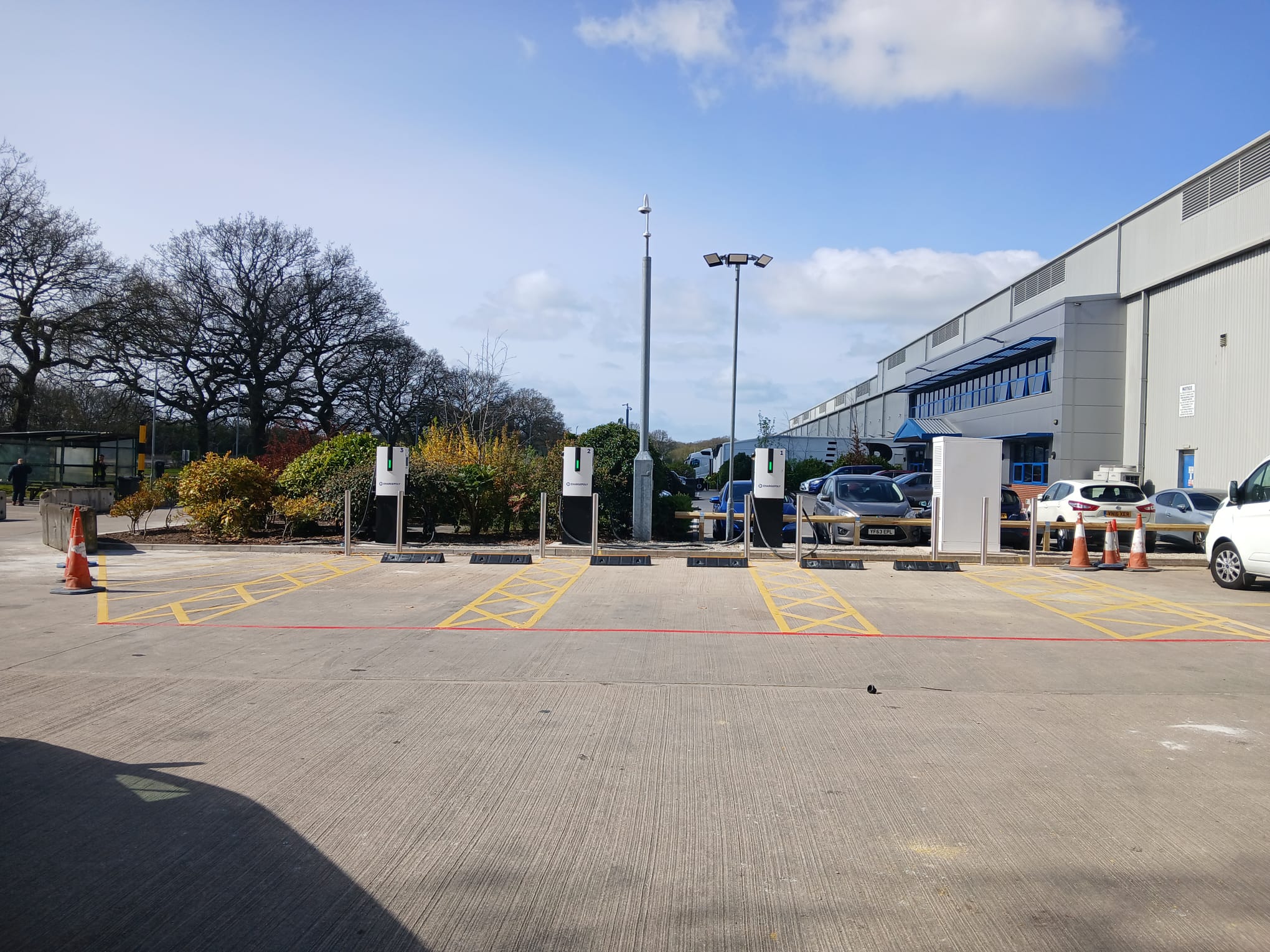
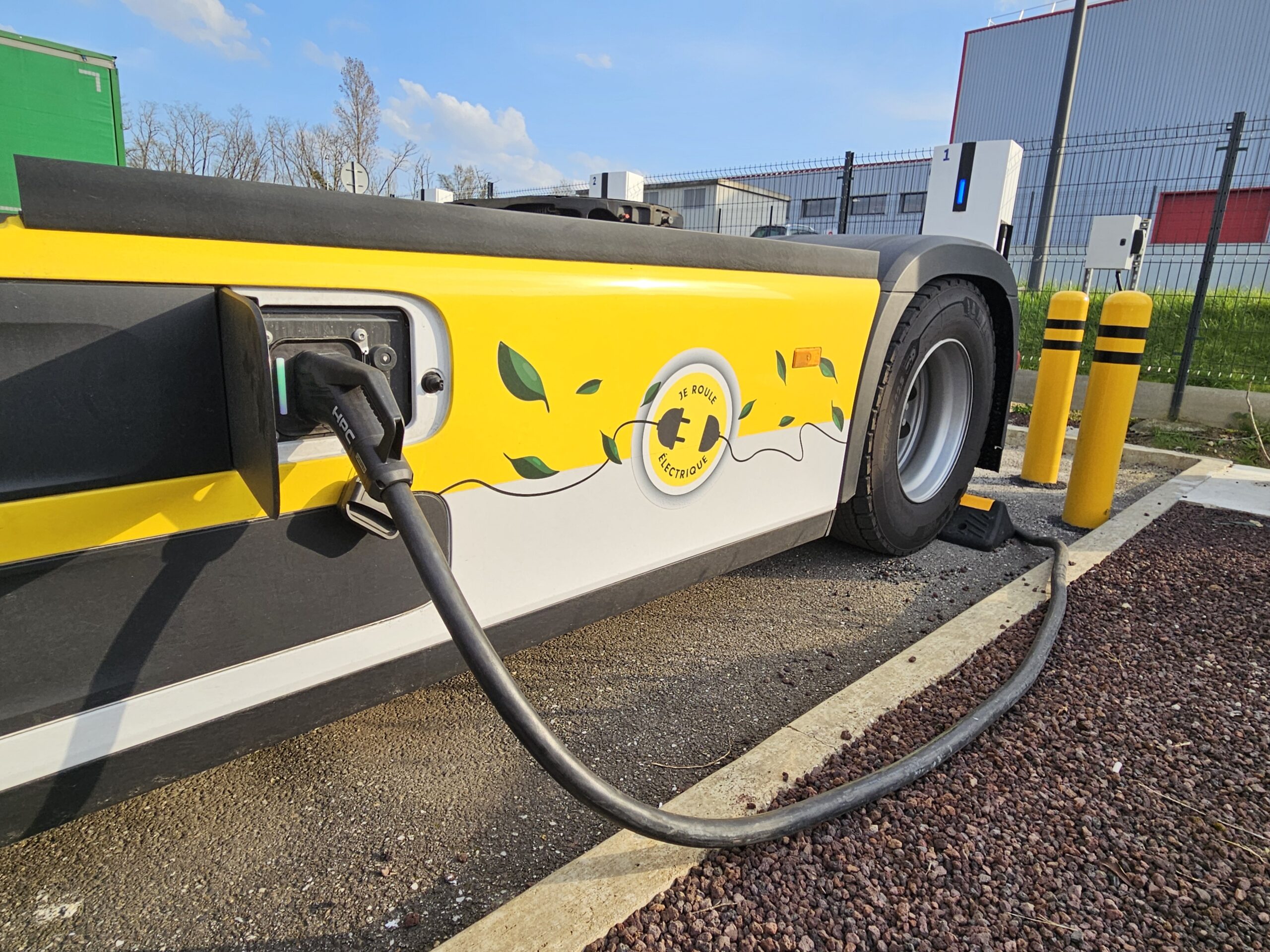
By shifting to a decentralized architecture, like the system designed by Chargepoly, the hardware economics and operational capabilities completely transform. Instead of individual chargers, a centralized power cabinet routes energy to multiple slimline satellite dispensers. This unlocks total operational flexibility:
- The “Slow” Multi-Vehicle Mode: Overnight, the system dynamically orchestrates power, charging many vehicles simultaneously or sequentially at lower outputs to perfectly match their morning departure times.
- The “Fast” Priority Mode: During the day or in an operational crunch, the software can automatically redirect the entire reservoir of power to just one or two vehicles, giving them an ultra-fast, rapid turnaround charge.
2. Factoring in the Depot Charging Scheme Grant
The financial argument for decentralized systems becomes even more undeniable when utilizing the UK Government’s Depot Charging Scheme (DCS) grant. The multi-year programme provides massive capital relief by covering 70% of eligible chargepoint hardware and associated civil engineering costs.
Consider a real-world project deployment using a centralized model. Installing a heavy-duty 360kW Power Unit alongside 3 satellite dispensers carries a comprehensive hardware and core installation cost of roughly £145,000.
When applying the 70% grant, the financial breakdown shifts dramatically:
- Total Infrastructure Cost: £145,000
- DCS Grant Subsidy (70%): -£101,500
- Net Fleet Operator CapEx: £43,500
- Operational Capability: Based on site utilisation analysis, this net investment of £43,500 can support charging up to 15 trucks in a 24-hour period.
Rather than spending £46,000 on a single, low-powered box that can only charge one truck at a time, a fleet operator pays a net £43,500 for a 360kW multi-satellite hub. That drops the actual capital requirement to just £14,500 per charging point at scale.
3. Solving the Grid Connection Bottleneck via Load Planning
The fear of massive grid upgrade costs, which can take months to negotiate with District Network Operators (DNOs), stems from planning for peak simultaneous power rather than total energy delivered.
If 5 trucks each require a 150 kW charge simultaneously, traditional standalone setups demand 750 kW of available grid capacity. With the intelligent sequential charging and dynamic load planning built into modern management software:
- Power is dynamically routed to the truck that needs it most (e.g., the vehicle leaving earliest).
- Energy delivery is flattened and staggered across the depot’s available time window (typically an 8-to-10-hour overnight shift).
As a result, the peak grid requirement can be securely capped at just 300 kW, completely eliminating the need for expensive high-voltage substations or disruptive grid reinforcement fees.
4. Real-World Proof: UK Fleet Deployments in Action
This is not theoretical. Leading UK fleet operators are already proving that distributed charging architecture dramatically lowers total cost of ownership (TCO).
Case Study: Reed Boardall
At Reed Boardall, one of the UK’s leading cold-storage transport specialists, a centralized high-power system was deployed specifically for heavy-duty operations. Rather than installing isolated, static chargers, the depot utilizes a single 360 kW Power Unit supplying 3 satellite dispensers.
Thanks to automated load planning via Chargepoly’s Lucie software, energy is distributed sequentially according to strict departure schedules and temperature-controlled requirements. This prevents grid overload while ensuring 100% operational readiness, maximizing the utilization of every kilowatt without the multi-million-pound price tag.
5. What Fleet Operators Should Ask Instead
Instead of asking “How much does one charger cost?”, logistics managers looking to electrify should ask:
- What is my actual depot dwell time and true energy throughput requirement?
- How can dynamic software optimize my existing grid connection before I pay for a physical upgrade?
- Is my charging infrastructure agile enough to offer both slow fleet charging and rapid top-ups from the same hardware footprint?
Conclusion
Electrifying heavy transport is undeniably a major operational shift, but it does not need to start with an inflated £46k-per-truck price tag or prohibitive grid fees. By combining dynamic energy management hardware with the available Depot Charging Scheme grant, UK transport fleets can achieve a highly cost-effective, future-proof path to net-zero.
Don’t navigate the transition alone. The next funding window for the Depot Charging Scheme opens at the end of October. We have strong experience of the previous two phases of the scheme and a high success rate.
To ensure your fleet secures this critical capital support, we offer comprehensive site energy assessments and can manage the grant application process for you from start to finish.
Get in touch with our team today to get ahead of the competition.