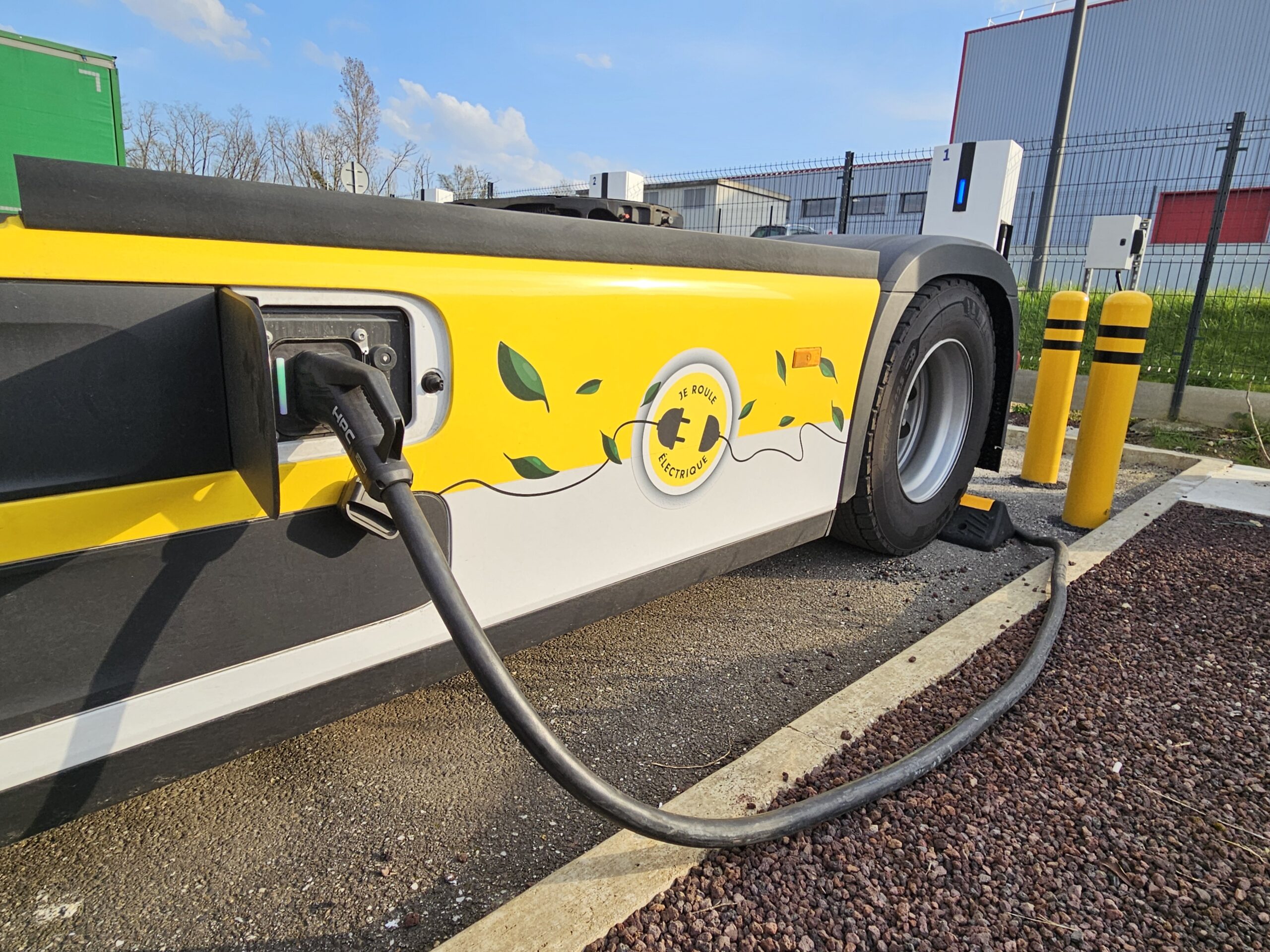
With the commissioning of our first fast-charging stations dedicated to heavy-duty mobility, we have gained a close-up view of what it takes to electrify a large-scale truck fleet. These hands-on experiences highlight the critical role of infrastructure and expertise in ensuring performance and availability. Here are the five key lessons.
1. Availability: a key performance indicator
- Field insight: In freight transport, vehicle availability is a decisive factor. Operators must adhere to strict schedules to avoid delivery delays and penalties, while maximising fleet productivity. Even short periods of downtime can result in significant time losses and additional costs. In this context, fast and reliable access to energy is essential for daily operations.
- Chargepoly expertise: Our stations achieve operational availability exceeding 99% (Chargepoly internal data, 2025). Through our Lucie monitoring platform and preventive maintenance protocols, we provide real-time oversight and minimise unexpected interruptions, offering a reliable infrastructure for electric fleets.
- Business impact: High station reliability allows operators to integrate electric vehicles into daily operations with confidence, reducing the risk of delays and optimising overall fleet efficiency.
2. Flexible charging optimises TCO
- Field insight: The switch to electric remains a challenge for many companies due to upfront costs and the complexity of energy management. Fleets that combine overnight depot charging with targeted fast charging, however, report significant reductions in energy consumption per kilometre up to 30–40% (ICCT 2022). This demonstrates the importance of optimised charging strategies to maximise return on investment.
- Chargepoly expertise: Our stations are designed to intelligently manage power peaks, prioritise vehicles according to operational needs, and optimise charging. Integrating high-performance Energy Management Systems (EMS) reduces unnecessary power draws, optimises kWh consumption, and stabilises operating costs, ensuring a controlled TCO for electric fleets.
- Business impact: Effective energy planning, supported by a capable EMS, is a tangible lever to lower operational costs, secure profitability, and facilitate the transition to electric in day-to-day operations.
3. Modularity and scalability: preparing for growth
- Field insight: Fleets evolve constantly, both in size and operational requirements. Modular, distributed charging stations allow new charging points to be added easily as fleets grow, offering a gradual and tailored response to real needs.
- Chargepoly expertise: Through customised preliminary studies, we help clients design stations perfectly sized for their initial needs while anticipating future infrastructure growth. This approach prevents overinvestment and ensures the infrastructure can support fleet expansion.
- Business impact: This flexibility translates into optimised CAPEX, infrastructure aligned with actual needs, and the ability to accommodate fleet growth without technical constraints, enabling smooth and scalable investment planning.
4. User experience: drivers and operations
- Field insight: Drivers emphasise the importance of smooth operation and fast charging to minimise downtime and optimise vehicle rotations (ICCT 2021). Complex or slow infrastructure can cause frustration and reduce productivity, even in well-planned fleets.
- Chargepoly expertise: Our stations simplify the driver experience with intuitive interfaces and standardised charging procedures. Today, Autocharge ensures fast, error-free connections, while tomorrow, Plug & Charge will offer an even smoother experience, letting drivers focus on their missions rather than the charging process.
- Business impact: A positive user experience directly improves productivity and driver satisfaction, contributing to overall operational efficiency and the successful transition to electric fleets.
5. System interoperability: streamlining operations
- Field insight: Heavy-duty fleets often rely on a mix of vehicles and infrastructure, sometimes including older systems. The coexistence of different solutions can slow operations and complicate energy management if information flows are not seamless.
- Chargepoly expertise: Our solutions are designed to ensure interoperability between legacy systems and new infrastructure. With the Lucie platform, charging data, fleet priorities, and energy flows are centralised and harmonised, enabling smooth and secure operations without loss of time or efficiency.
- Business impact: Interoperability facilitates gradual integration of new technologies, reduces operational errors, and optimises overall fleet productivity, while ensuring continuity during the transition to electric.
Chargepoly’s first heavy-duty stations have shown that charging infrastructure is a decisive factor in successful fleet electrification. Thanks to our fleet-centric approach, combining advanced monitoring, modularity, and hands-on expertise, Chargepoly delivers reliable, scalable, and optimised solutions to maximise availability and performance of electric vehicles.